
Building the Product Architecture for One of the World's Largest Ticketing Platforms
A new Chief Product Officer had a mandate to move a business-driven organization toward a product-first model. The portfolio had outrun the language and infrastructure around it. TVC was brought in to build the foundation.
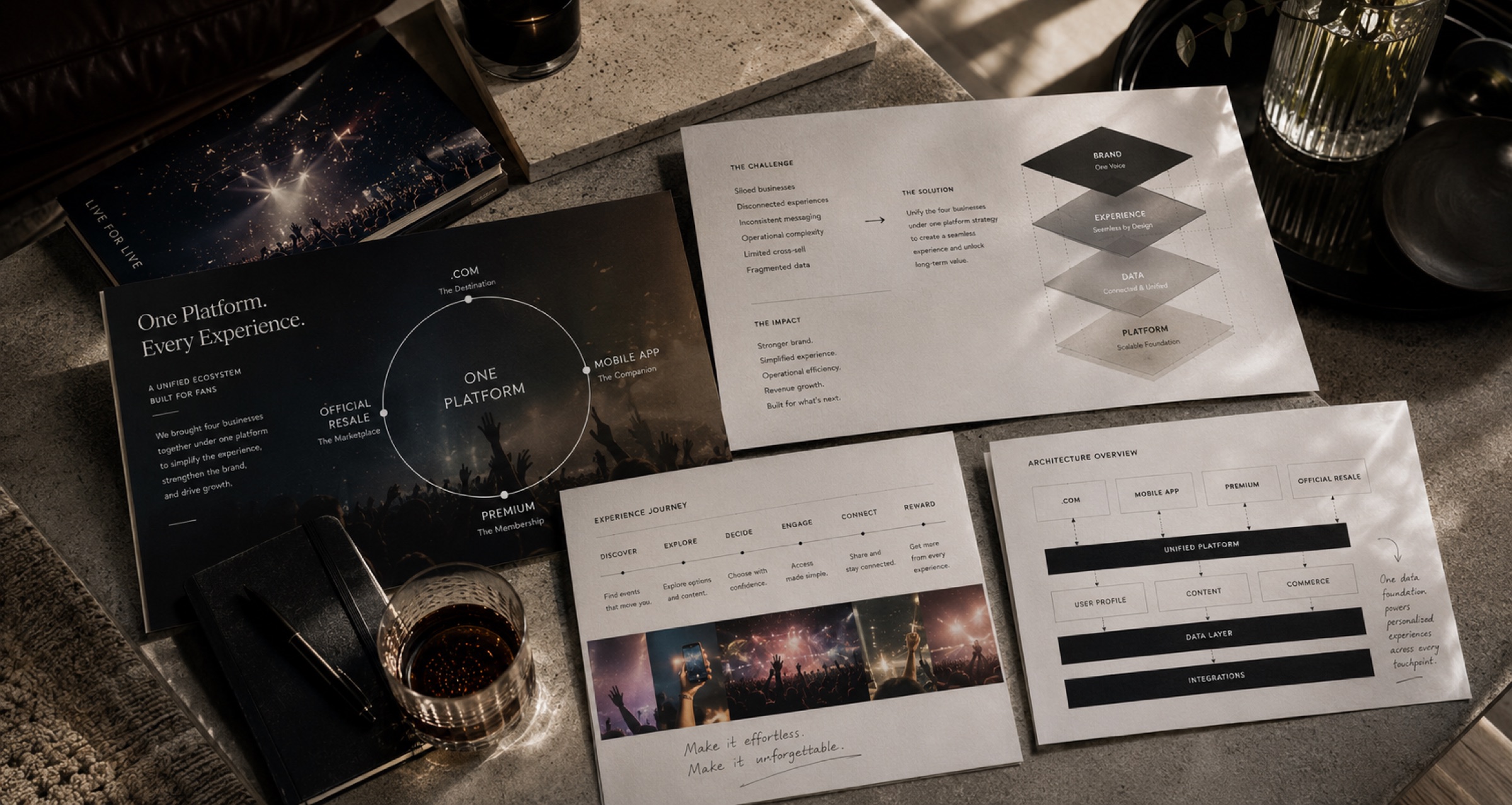
A new Chief Product Officer was brought in to help transition the business toward a product-first operating model. The products had evolved. The language, structure, and supporting systems had not.
TVC was engaged to build the strategic foundation the transition required.
The platform spanned eight solutions, more than forty product names, and over one hundred capabilities across both a new platform and the legacy systems it was replacing.
Its customers included venues, festivals, clubs, arenas, and promoters in one of the most competitive and commoditized markets in media and technology.
Through interviews with product leaders, business stakeholders, sales leadership, and brand partners across global markets, one pattern emerged.
Different teams described the same products in different ways.
There was no shared definition for what qualified as a platform, a solution, or a feature. That inconsistency made it difficult to explain the portfolio internally, differentiate it externally, or build a repeatable product marketing function.
Like many companies in the category, the platform competed in a market where feature parity had become the norm. Before the company could define what made it different, it first needed a common language for describing what it had built.
A brand audit confirmed what leadership already suspected: the company had sophisticated products, but it did not yet have a product marketing discipline.
Building the Foundation
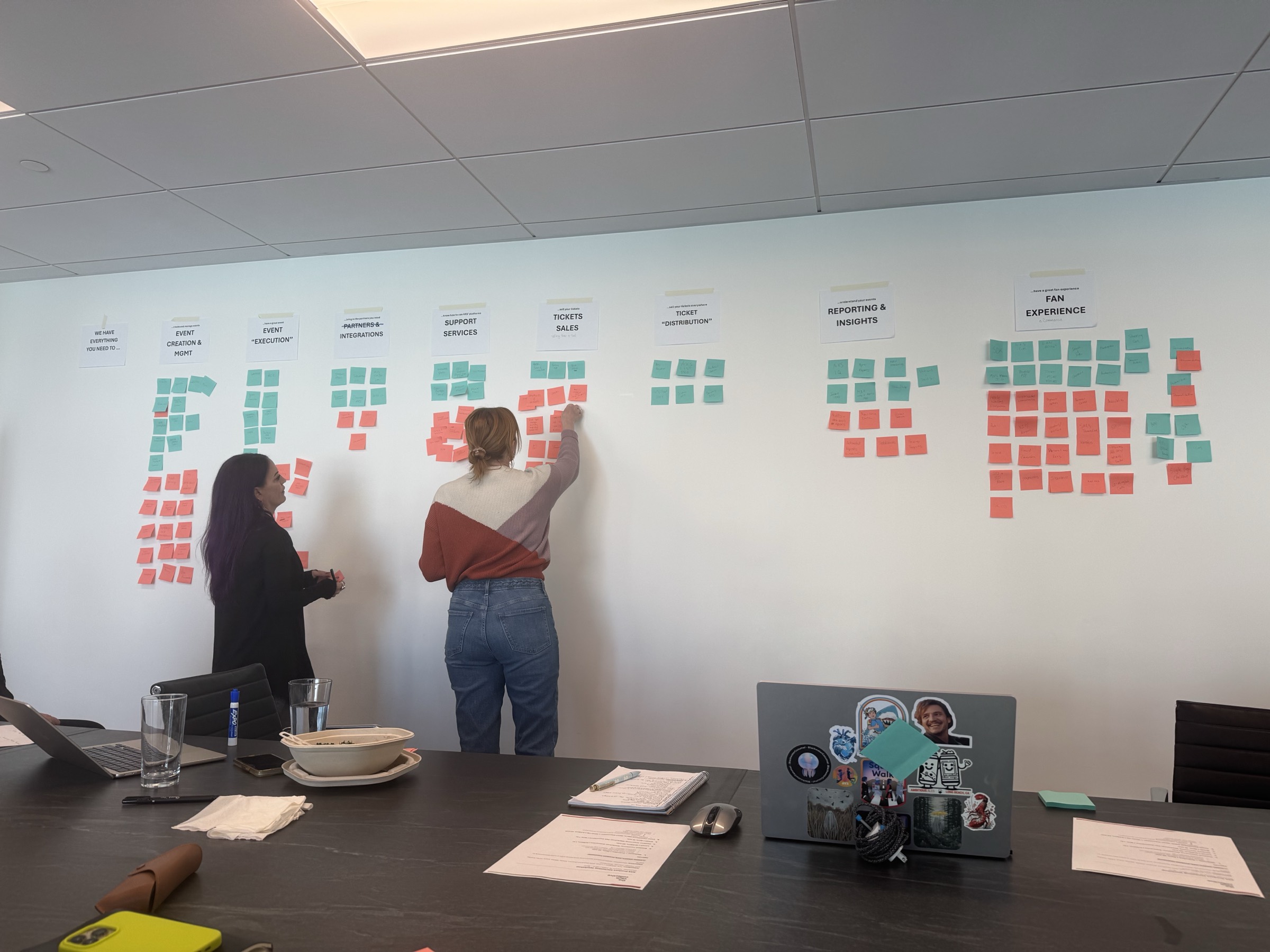
With a clear understanding of the portfolio and the organizational challenges surrounding it, TVC convened a full-day working session with leaders across product, sales, and the business.
The objective wasn't to write messaging. It was to create a shared framework for understanding the portfolio.
By the end of the session, leadership shared the same vocabulary for describing products that had previously been interpreted differently across teams. That shared language became the foundation for every decision that followed.
Building the Product Architecture
Building the taxonomy became one of the most collaborative parts of the engagement.
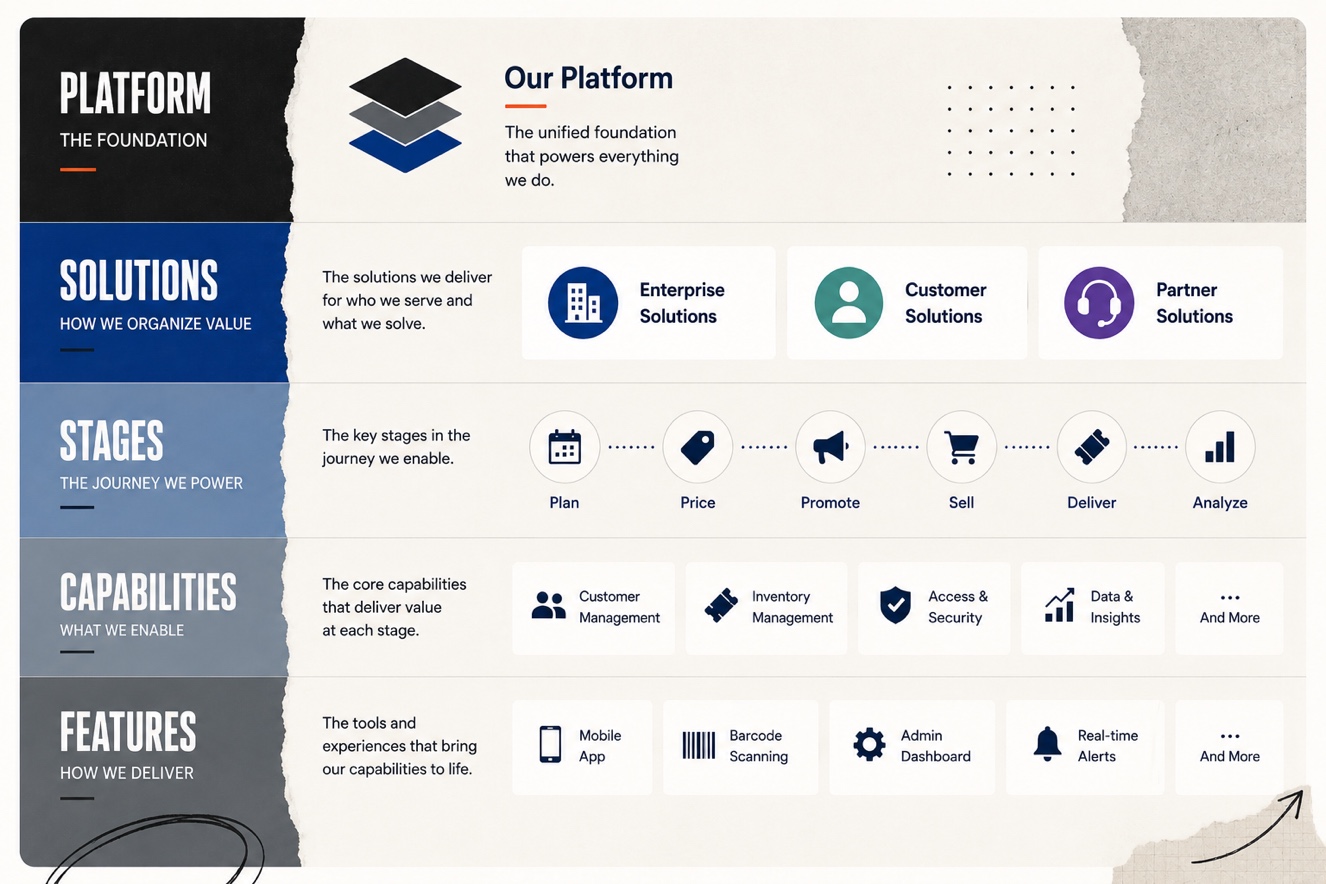
The framework evolved over five months and six meaningful iterations as different teams entered the process and tested it against technical reality, customer needs, and organizational priorities.
The most significant shift came when the product organization became deeply involved, requiring the framework to be restructured before it could accurately reflect the platform.
The final architecture organized more than forty product names into five clear layers: Platform, Solutions, Stages, Capabilities, and Star Products.
For the first time, the organization had a system that both internal teams and external buyers could navigate without contradiction.
Defining the Market Story
Once the portfolio had a common structure, TVC turned to the question that mattered most.
What did the platform genuinely own that competitors could not easily replicate?
Through stakeholder interviews, competitive analysis, and positioning workshops, TVC separated category expectations from meaningful differentiation. Four market messages emerged, each grounded in capabilities unique to the platform rather than features common across the industry.
Those messages became the strategic foundation for every product and sales conversation moving forward.
Turning Strategy Into an Organizational Asset
The work extended beyond taxonomy and positioning.
Recognizing the opportunity to create greater consistency across the organization, the Chief Revenue Officer asked TVC to develop a strategic sales narrative that could be used across executive presentations, customer conversations, and thought leadership initiatives.
TVC developed the narrative, wrote the presentation, and partnered with the creative team to produce a fully interactive sales experience built around the four market messages.
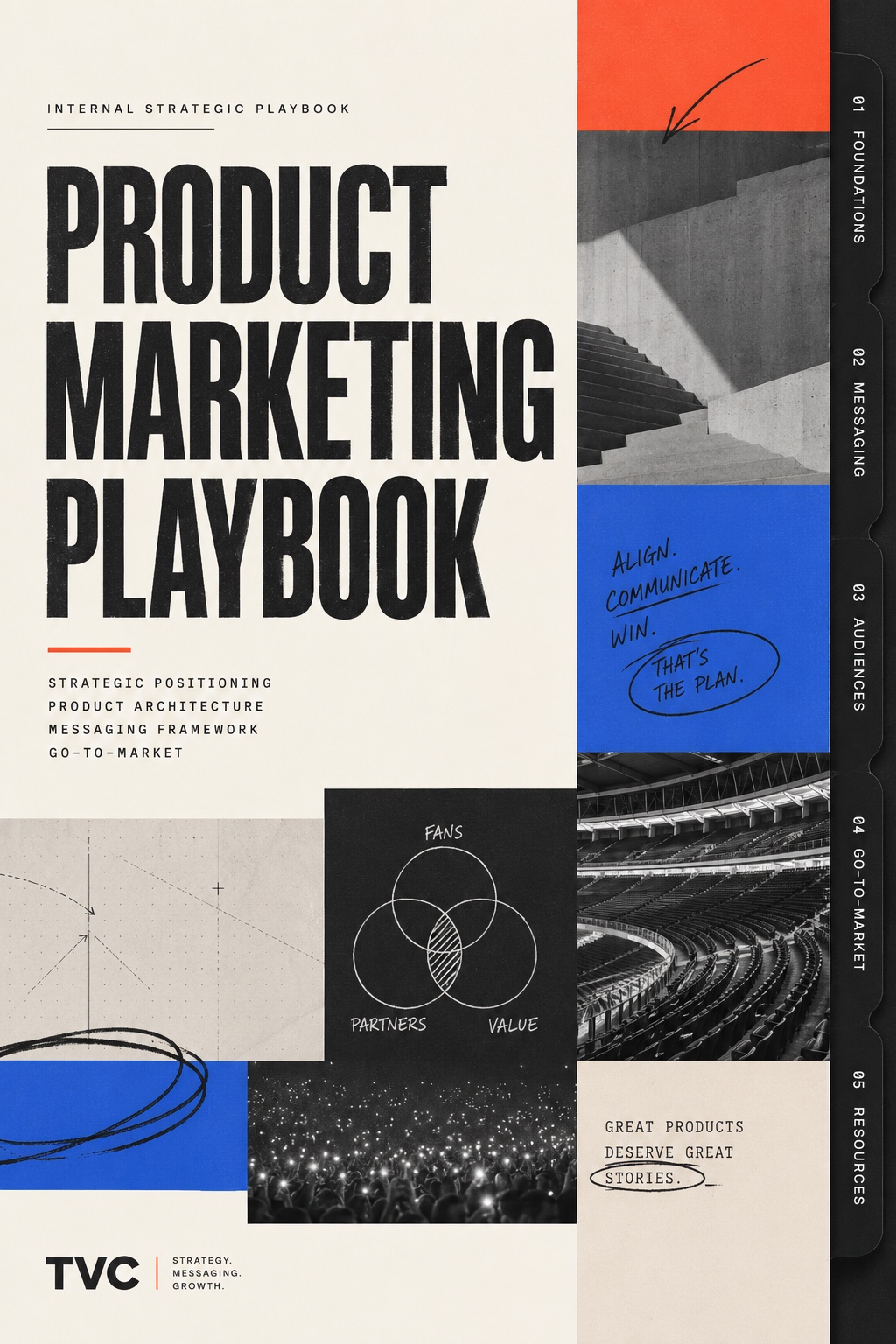
To support long-term adoption, TVC also delivered:
- Product messaging framework
- Audience-specific positioning
- Customer personas
- Go-to-market process and product launch checklist
- Brand voice and tone guide
Together, these assets established the operating system for a formal product marketing function and gave the sales organization a consistent way to communicate the platform's value.
The engagement fundamentally changed how the organization understood, launched, and communicated its products.
The five-layer taxonomy became the standard framework for organizing the product portfolio and introducing new products to market.
The executive sales narrative became the company's primary high-level presentation for customer conversations and thought leadership.
Product marketing evolved into a defined organizational function built on a shared language, repeatable processes, and consistent messaging.
For the first time, product, sales, and marketing were telling the same story. The company didn't change what it had built. It changed how the organization understood its products, how new products were introduced to market, and how customers experienced their value.
- Five-layer product architecture adopted across the organization
- Four differentiated market messages grounded in competitive research
- Executive sales narrative and interactive presentation
- Product messaging framework and customer personas
- Go-to-market process and product launch checklist
- Brand voice and tone guide supporting product communications
A shared language became the foundation for everything that followed.